
When your door lock resists the key or feels stiff to operate, it’s usually telling you something specific. In Raleigh’s humid climate, where heat and moisture cycle through the seasons, locks can stiffen from debris buildup, corrosion, internal wear, or simple misalignment. The problem often starts small but gets worse if ignored.
Here’s what’s actually happening inside the lock, what causes the stiffness, and when you should call a professional versus trying a quick fix.
What Causes a Door Lock to Become Hard to Turn
Most stiff locks have one or more of the following issues. Identifying the cause helps determine whether you can solve it yourself or need help.
Dirt and Debris Inside the Cylinder
Over time, dust, pollen, and grime work their way into the keyway. Raleigh’s spring and fall pollen storms are notorious for this. The pins and springs inside the cylinder stick, making key insertion and turning difficult.
Lack of Lubrication
Lock cylinders need occasional lubrication. When the internal components dry out, friction increases. This is especially common in exterior locks exposed to temperature swings and weather.
Misaligned Latch or Strike Plate
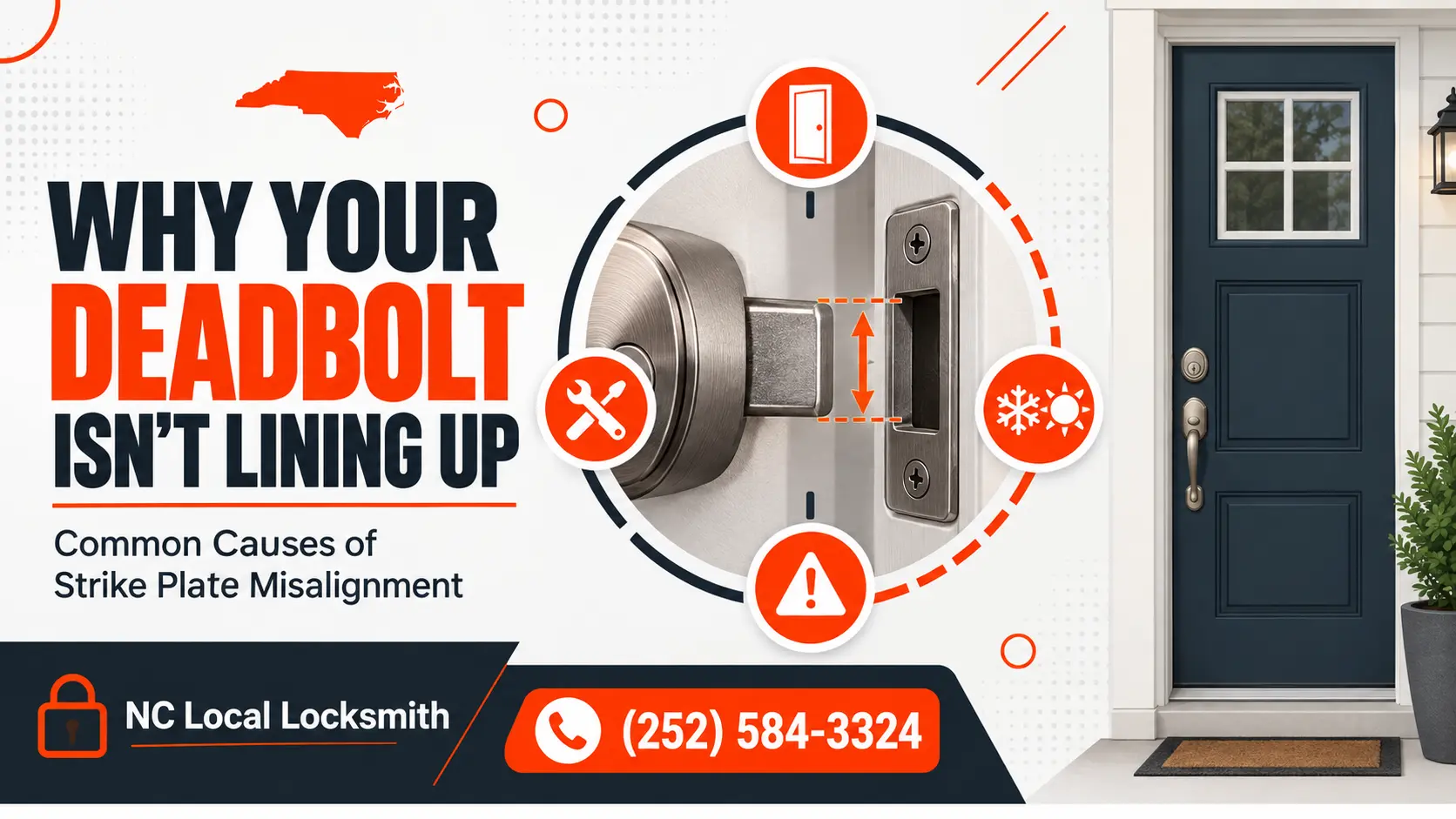
If your door frame has shifted slightly common in newer homes settling or older homes with foundation movement the deadbolt or latch may not line up perfectly with the strike plate. You end up forcing the key to turn against resistance from a binding bolt.
Worn Key or Lock Pins
Older keys develop rough edges or grooves that no longer match the pins precisely. Similarly, the pins inside the lock can wear down or corrode. Either way, the mechanism no longer operates smoothly.
Corrosion from Humidity
Raleigh’s humidity, especially in summer, can cause internal corrosion in locks. Brass and steel components oxidize, creating friction points that make turning the key feel like dragging metal through sand.
Quick Fixes You Can Try First
Before calling a locksmith, these simple steps might restore smooth operation. Not every stiff lock needs professional intervention.
- Clean the keyway: Use compressed air to blow out dust and debris. Avoid inserting anything solid that could damage the pins.
- Lubricate the cylinder: Apply a small amount of graphite powder or silicone-based lock lubricant. Never use WD-40 or oil-based products, they attract more dirt and gum up the mechanism.
- Check the door alignment: Close the door and watch the deadbolt as you turn the key. If it drags or catches on the strike plate, the frame may need adjustment.
- Inspect your key: Look for bent edges, worn grooves, or visible damage. Try a spare key if you have one.
If the lock still resists after these steps, the problem is internal or structural. Forcing it can damage the lock beyond repair.
When to Call a Locksmith for Lock Repair
Some situations require professional tools and experience. Here’s when to stop troubleshooting and make the call.
If the lock only works intermittently, turning smoothly one time, sticking the next, the pins or springs inside are likely failing. This isn’t a cleaning issue. It’s mechanical wear that requires disassembly and parts replacement.
If you’ve already tried lubricant and cleaning with no improvement, the internal components are probably corroded or damaged. Continuing to force the key can snap it inside the cylinder.
If the door frame is visibly misaligned gaps around the door, the latch is not centering in the strike plate, you need both lock repair and carpentry work. A locksmith can reposition the strike plate or adjust the latch.
If your key is bent, worn, or doesn’t have clean edges anymore, a locksmith can cut a fresh key from the original code or an existing spare.
Why Raleigh Locks Face Unique Challenges
Raleigh sits in a humid subtropical zone with summer humidity averaging above 70%. Exterior locks experience constant moisture exposure year-round. Older homes in historic areas like Oakwood or Mordecai often have locks that have been in place for decades. The combination of age, humidity, and settling foundations creates a perfect recipe for stiff, hard-to-turn locks.
What to Expect During Professional Lock Repair
When you call NC Local Locksmith, we diagnose the issue on-site by examining the lock, testing the key, and checking door alignment. In many cases, we can clean and lubricate the lock, adjust the strike plate, or cut a fresh key on the spot. For locks with internal damage, we’ll explain whether repair or replacement makes more sense. We won’t upsell you on high-security locks unless you ask or the existing lock is beyond repair.
Frequently Asked Questions
Can I use WD-40 to fix a stiff lock?
No. WD-40 attracts dust and leaves a residue that gums up the internal pins. Use graphite powder or silicone-based lock lubricant instead.
How often should I lubricate my door locks?
Once a year is usually enough for interior locks. Exterior locks in high-humidity areas like Raleigh benefit from lubrication twice a year, in spring and fall.
Will forcing the key damage the lock?
Yes. Forcing a stiff lock can snap the key inside the cylinder, bend internal pins, or crack the housing. If it’s sticking, stop and troubleshoot the cause.
Ready to get started?
NC Local Locksmith LLC is here to help with a door lock hard to turn in Raleigh, NC. Reach out today, and we’ll walk you through your options, answer your questions, and book a time that works for you.
Call (252) 584-3324 or visit NC Local Locksmith LLC to schedule your appointment.