You’re standing in the hardware aisle staring at two deadbolts. One says Grade 1, one says Grade 2, and there’s a $40 price difference. You’re wondering if that extra money actually buys you anything worth having.
The grading system comes from the American National Standards Institute (ANSI), and it matters more than most people realize. Here’s what those numbers actually mean for your home or business.
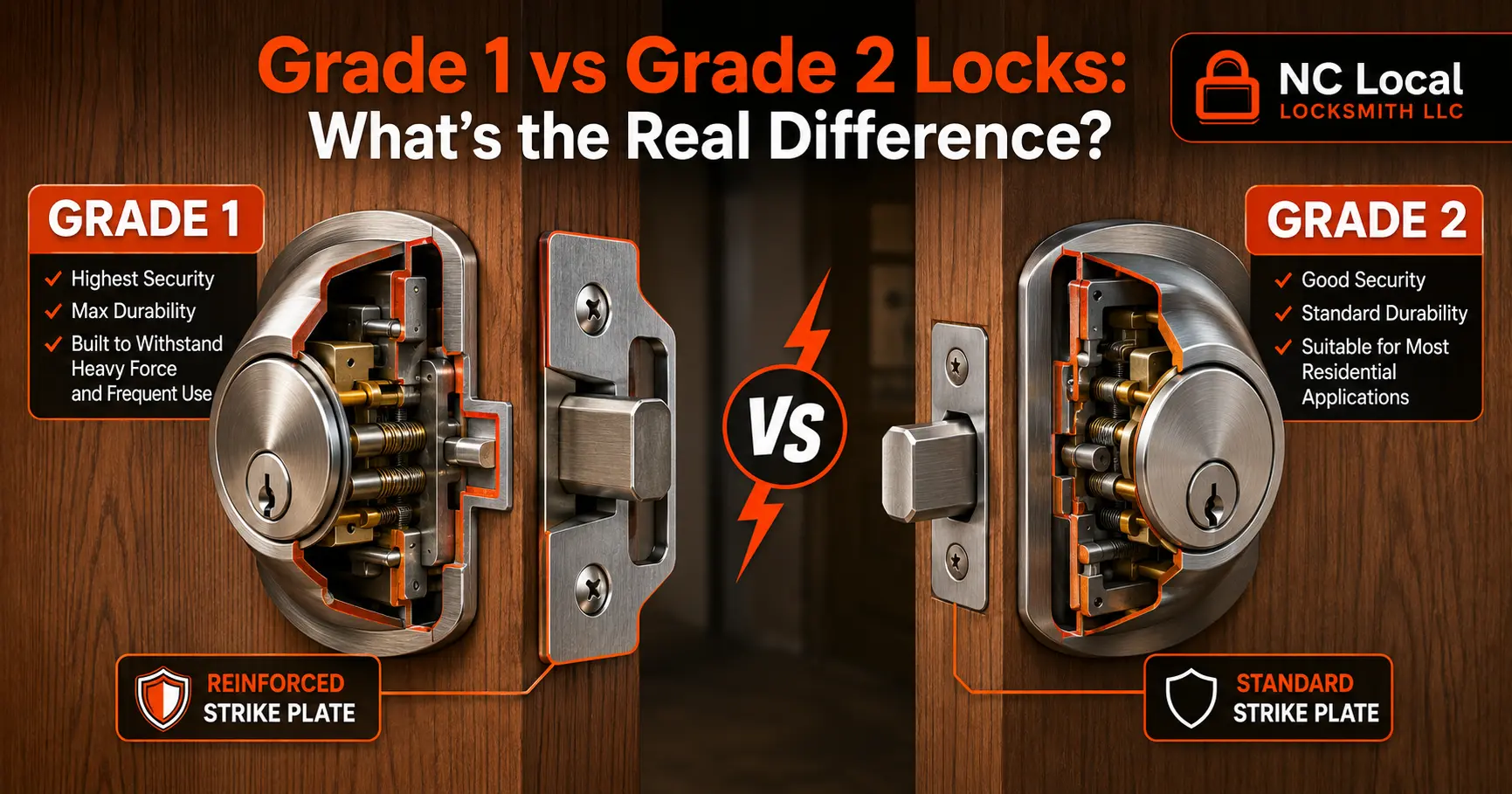
Quick Comparison: Grade 1 vs Grade 2 Locks
| Feature | Grade 1 | Grade 2 |
|---|---|---|
| Strike test (forced entry attempts) | 10 strikes @ 75 lbs each | 5 strikes @ 75 lbs each |
| Cycle test (lock/unlock) | 800,000 cycles | 400,000 cycles |
| Door thickness rating | 1⅜” to 2″ | 1⅜” to 2″ |
| Best for | Commercial, high-traffic, exterior doors | Residential exterior, low-traffic commercial |
| Typical cost (installed) | $180-$350 | $120-$220 |
What the ANSI Grades Actually Test
ANSI testing isn’t about picking locks or bump keys. It measures physical durability through three specific tests that simulate real-world stress.
Strike Testing
A Grade 1 lock survives 10 direct strikes with a 75-pound force without failing. Grade 2 handles 5 strikes. This matters if someone tries to kick in your door. The lock that holds through 10 impacts is twice as resistant to forced entry.
Cycle Testing
Grade 1 locks are tested to 800,000 lock and unlock cycles. Grade 2 gets 400,000. In residential use, that’s roughly 50 years vs 25 years. For a business with constant traffic, the difference shows up much faster.
Operational Testing
Both grades must function in temperature extremes and maintain smooth operation under various load conditions. The pass/fail threshold is the same — Grade 1 just endures more abuse before testing.
When to Choose Grade 1
- Commercial properties: Office buildings, retail stores, warehouses — anywhere employees and customers use the door constantly
- Rental properties: Tenant turnover means more key copies floating around and higher usage
- High-crime areas: If you’ve had break-in attempts or your neighborhood sees regular property crime, the extra resistance matters
- Long-term cost savings: You’ll replace a Grade 2 lock twice in the time a Grade 1 lasts
When Grade 2 Is Good Enough
If you’re securing a standard single-family home in a decent neighborhood, Grade 2 is perfectly adequate. Most residential break-ins happen through windows or unlocked doors, not by battering down a deadbolt.
Grade 2 locks cost less, meet residential building codes, and will outlast your time in the house. Save the upgrade money for better strike plates, longer screws, or a high-security lock if you’re genuinely concerned about security.
Where I won’t install Grade 2: detached garages with workshop tools, back doors hidden from street view, or any door in a commercial building. The risk-to-cost ratio doesn’t make sense.
What Grade Doesn’t Tell You
The ANSI grade measures durability, not pick resistance. A Grade 1 lock with basic pin tumblers can still be picked faster than a Grade 2 lock with security pins. If you’re worried about skilled entry, you need to look at the cylinder design separately.
Installation quality matters more than the grade. A Grade 1 lock installed with ½-inch screws into hollow jamb won’t stop anyone. A Grade 2 lock with 3-inch screws into solid framing performs better in the real world.
Real-World Performance in North Carolina
Humidity is hard on locks here. Coastal properties from Wilmington to the Outer Banks see corrosion that can freeze a cheap lock in two years. Western North Carolina gets temperature swings that stress moving parts.
I replace more failed Grade 3 and unrated locks in Asheville and Fayetteville than anywhere else. The Grade 2 locks we installed ten years ago are still working fine. Grade 1 commercial locks in high-traffic spots like Raleigh office buildings rarely need service beyond occasional lubrication.
Frequently Asked Questions
Is there a Grade 3 lock?
Yes. Grade 3 is the lowest ANSI rating, tested to only 200,000 cycles and 2 strikes. These are suitable for interior doors or very low-security applications. I don’t recommend them for any exterior door.
Do smart locks have ANSI grades?
Some do, some don’t. The mechanical deadbolt portion can be ANSI-rated even if the electronic components aren’t separately tested. Check the specs — reputable manufacturers will list the rating if they have one.
Can I upgrade my existing lock to a higher grade?
Usually not. The door prep might be the same, but you’re better off doing a complete lock installation to ensure proper fit and performance.
How do I know what grade my current lock is?
Look on the lock face or packaging. Rated locks will display “ANSI/BHMA Grade 1” or similar. If there’s no marking, it’s probably unrated, which typically performs below Grade 3.
Will a Grade 1 lock prevent all break-ins?
No lock prevents all break-ins. A determined person with time and tools can defeat anything. Grade 1 raises the difficulty and time required, which pushes most opportunistic criminals to easier targets.
Get the Right Lock for Your Situation
We install both grades across North Carolina depending on what you actually need — not what costs the most. If you’re upgrading security on a commercial property in Durham or replacing worn residential locks in Charlotte, we’ll walk you through the options that make sense for your situation and budget.
Call NC Local Locksmith at (252) 584-3324. Licensed, insured, and no pressure to buy more lock than you need.